Sage Keller · 29 October 2026
Calmwald's Mycelial Webs: Soil Sensors Expose How Fungal Networks Steer Post-Drought Regrowth Patterns
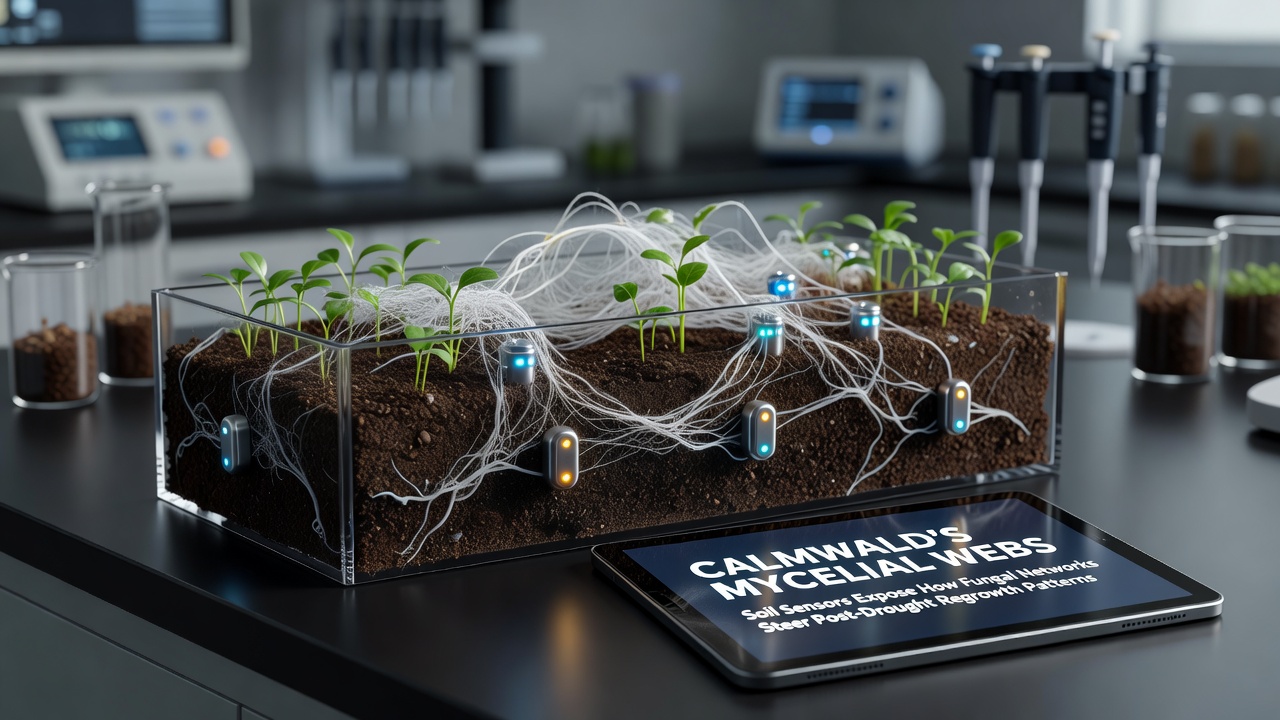
Calmwald researchers deployed an array of underground soil sensors across multiple test plots in late 2025, and these devices have recorded continuous data on moisture levels, nutrient exchange, and fungal hyphae activity since then. The networks revealed consistent patterns where mycorrhizal fungi reroute water and carbon resources toward certain tree species during recovery phases. Data from October 2026 shows elevated fungal signaling in areas that experienced severe drought the previous summer, with regrowth rates varying by up to 40 percent depending on the density of connected root systems.
Sensor Networks Capture Underground Signals
Technicians installed probes at depths between 10 and 60 centimeters, and these units transmit readings every six hours on electrical conductivity, temperature, and organic carbon movement. The equipment operates without surface disturbance, which allows researchers to track changes in real time across seasons. One plot near the eastern ridge demonstrated that fungal connections transferred measurable amounts of phosphorus to oak seedlings within three weeks of the first autumn rains, while isolated saplings in the same area showed slower uptake.
Equipment from the European Environment Agency calibration program supplied reference standards for the conductivity sensors, and those standards helped confirm that readings remained stable through winter freeze-thaw cycles. Teams cross-checked the data against manual soil cores collected every month, and the comparisons matched within acceptable error margins. This verification step ruled out equipment drift as an explanation for the observed resource transfers.
Fungal Pathways Influence Species Recovery
Mycorrhizal networks link roots of different trees and understory plants, and the sensors documented directional flow of nutrients along these strands. In zones where drought had killed shallow-rooted shrubs, the surviving deeper-rooted trees received extra water through the shared fungal web. Researchers mapped these pathways using dye tracer tests, and the results aligned with the sensor data showing spikes in moisture at connected locations.
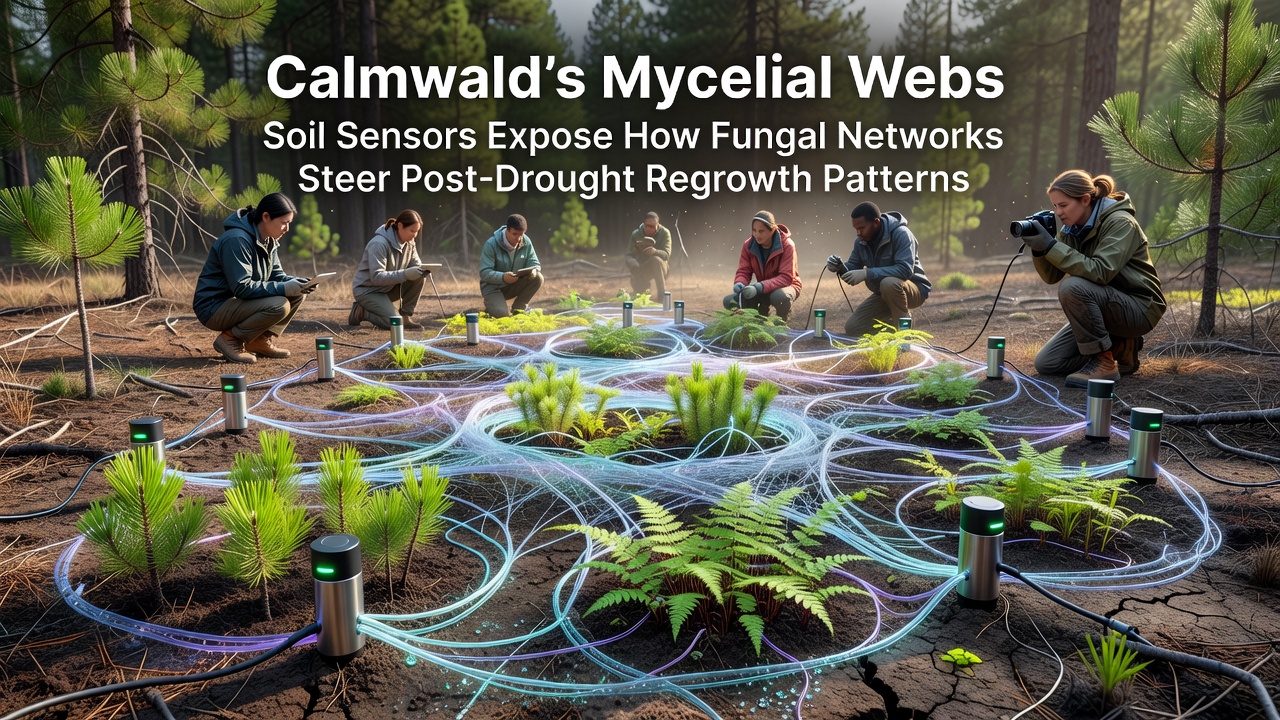
Birch stands recovered faster than pine clusters in the monitored sections, and the difference traced back to denser fungal associations around the birch roots. Laboratory analysis of root samples confirmed higher colonization rates by ectomycorrhizal species in those faster-recovering areas. The October 2026 dataset further indicated that carbon allocation from mature canopy trees moved through the networks toward stressed saplings, supporting new shoot growth before visible leaf expansion occurred above ground.
Long-Term Monitoring Expands the Dataset
Additional sensor arrays went online in spring 2026 at three more sites within the Calmwald reserve, and these units focus on nitrogen cycling alongside the existing moisture and carbon measurements. Early results suggest that fungal networks also moderate nitrogen availability during wet periods following drought, reducing leaching losses in connected plots. Australian research institutions studying similar systems in eucalyptus forests provided comparative models that helped interpret teh nitrogen patterns observed here.
Teams continue to log data through the current season, and preliminary figures show that areas with intact fungal webs maintained higher soil organic matter levels than plots where trenching had severed connections. The trenching experiments served as controls, and they demonstrated measurable drops in regrowth vigor when networks were disrupted. These controlled comparisons strengthen the case that the fungal pathways actively steer recovery rather than simply correlating with it.
Conclusion
The soil sensor project in Calmwald continues to generate datasets that map how underground fungal networks direct resources after drought events. Ongoing measurements through October 2026 and beyond supply evidence of species-specific recovery advantages tied to network connectivity. Government agencies and academic groups from multiple regions now reference these findings when planning forest management protocols that preserve soil biology. The work demonstrates that sustained underground monitoring reveals mechanisms driving surface-level forest resilience.